Category: NYC History
No LIta
Remember when Little Italy encompassed more than just a couple of blocks around Mulberry Street just North of Canal?
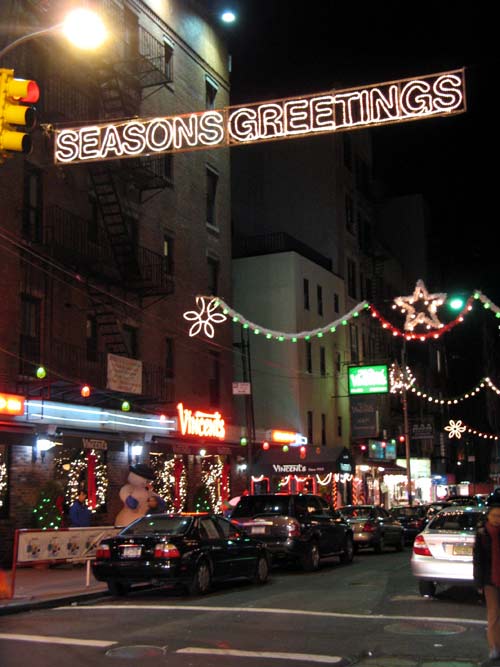
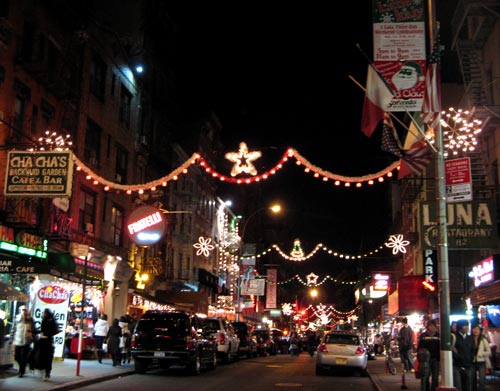
When I was attending Chinese school in the 80s, Canal Street marked the border between Little Italy and Chinatown. With an influx of new immigrants from mainland China, particularly Fuzhou, Chinatown expanded to the North into the Old World enclave, and East along East Broadway and Canal into streets that used to be considered part of the Lower East Side.
The wretched 1987 film China Girl dates to the bygone era when Canal Street was still in dispute. The film was promoted as a cross between Mean Streets and Romeo and Juliet — or West Side Story, without the music or dancing. In it, Chinese teenager Tyan-Hwa (Sari Chang) falls in love with Tony (Richard Panebianco), a pizza delivery boy from Little Italy. (He’s Eye-talian, see?) When a Chinese restaurant opens on the wrong side of Canal, tensions flare between the rival Chinese and Italian gangs, headed by Russell Wong and David Caruso, respectively. Yes, that David Caruso.
Do I need to tell you how it all ends? Or which David Bowie song was used on the soundtrack? (Hint: it was named the “Best Male Video of the Year” at the inaugural MTV Video Music Awards in 1984.)
I was reminded when snapping these photos North of Canal that Joe’s Ginger, my onetime favorite source for pork-and-crab soup dumplings (xiao long bao), has closed — presumably not owing to Italian gang pressures.
Marathon Sunday 2006
The New York City Marathon — since 2003, known as the ING New York City Marathon via a corporate sponsorship deal with the New York Road Runners — is held on the first Sunday in November. The race has been run has been run every year since 1970.
The first marathon had 127 runners participating in a 26.2-mile race that looped several times within Central Park. That year 55 runners crossed the finish line. In 1981, the course was redrawn to direct the 2,090 runners through all five New York City boroughs — a tradition which continues to this day.
In 2005, a record 87,625 people worldwide applied to run. Because of the popularity of the race, participation is limited to around 37,000 entrants, who are chosen largely by a random lottery system in June, with preference given to previous participants. NYRR members can also gain guaranteed entry by winning one, or completing nine, scored, qualifying races in the previous year, or by meeting qualifying time standards for a marathon (2:55:00 for men; 3:23:00 for women.)
In 1970, the entry fee for the marathon was $1. It has since been raised to $80-164 (based on residency and NYRR membership status), plus a $9 processing fee. Other costs include the mandatory ChampionChip scoring device ($35) for all entrants not already in possession of one.
The ChampionChip is a miniature transponder encased in a waterproof glass capsule, used for participant timing, identification and registration. It is the chip used in the biggest running events in the world (including the New York City, the Boston and the Rotterdam marathons) and a wide range of bicycle races, in-line skating and cross country events. The basis for the ChampionChip system is the radio-frequency- identification system (RFID) from Texas Instruments. This is the same technology that is also used for security locks in cars, admission control in buildings, credit card payment systems (MasterCard’s contactless PayPass and Chase’s blink card) and, it seems eventually for the NYC subway pass system.
Of course, the most famous runner in this year’s field of 38,368 starters was the 1999-2005 Tour de France winner, Lance Armstrong. Sunday morning’s television coverage followed the elite men’s and women’s runners and had one “Lance cam” fixed on Armstrong throughout the race.
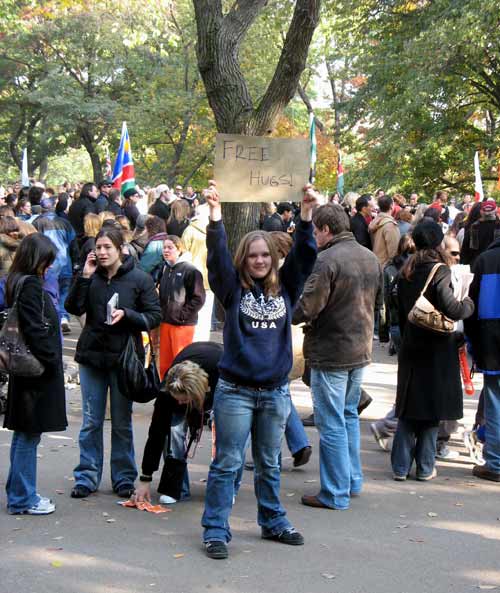
I made my way to Central Park, near the 26 mile mark, to cheer on the finishers.
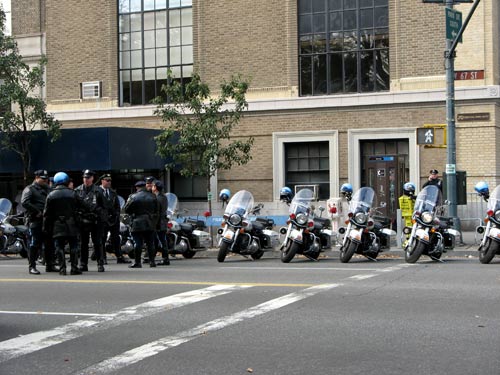
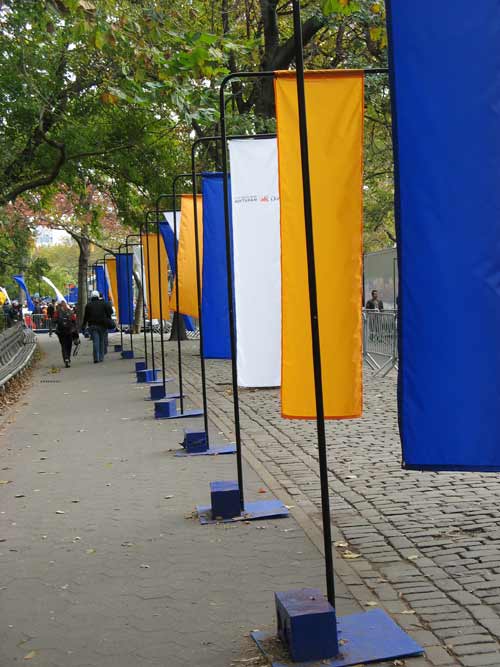
The crowd was in fine form, cheering away, and shouting encouragement by name to the runners who had identification emblazoned on their shirts. Go, “Mr. Awesome”!
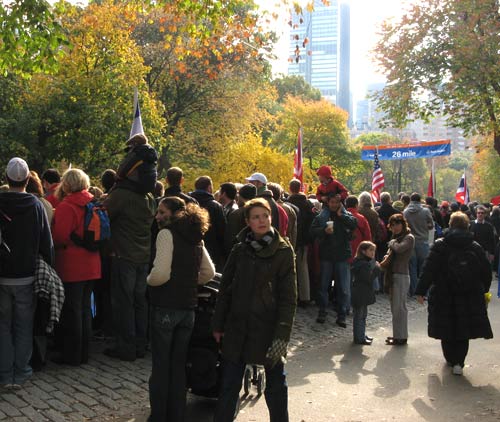
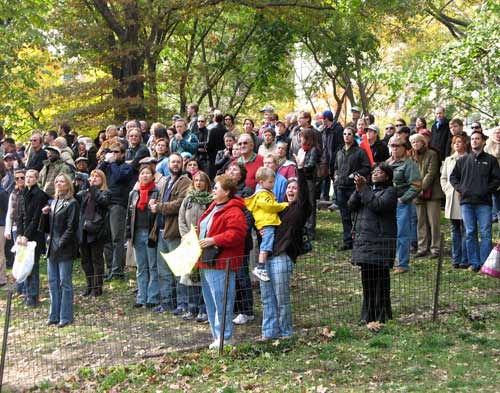
I had just missed the winners by the time I arrived, but then came the announcement over the loudspeaker. Lance Armstrong had entered the park! An audible buzz of excitement shot through the crowd. Minutes went by, and then I heard the distant rumbling cheer. Closer, closer…
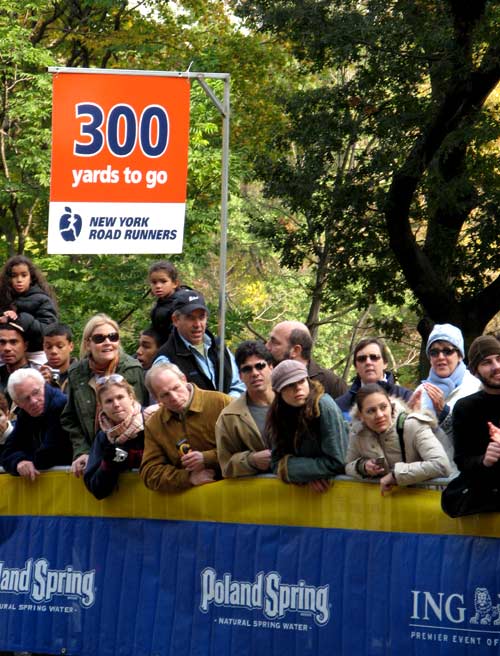
There he is…
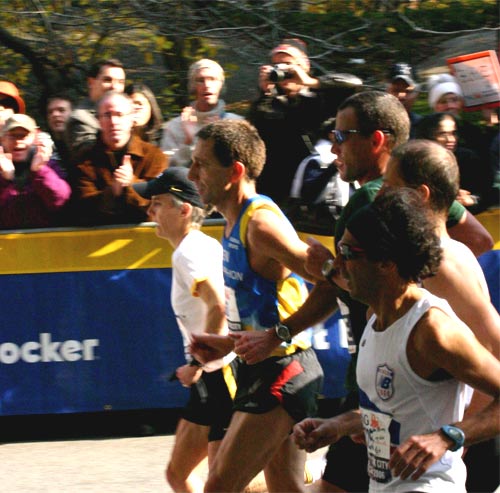
…and there he goes.
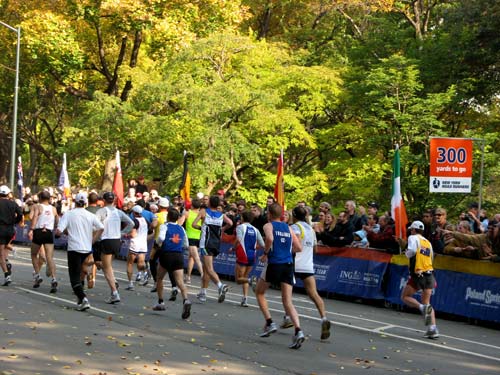
I stayed on for an hour more, to cheer on the rest of the field, most of whom looked remarkably spry, for having just run 26 miles.
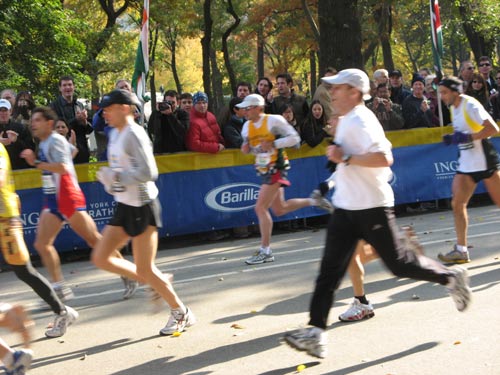
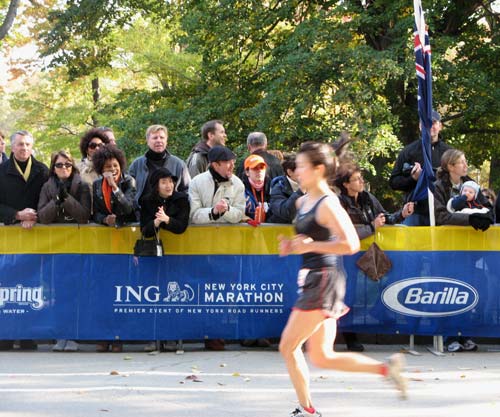
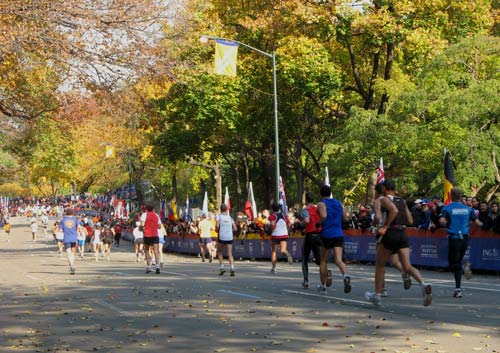
Jeļena Prokopčuka of Latvia repeated her 2005 NYC Marathon win in 2:25:05. Marílson Gomes dos Santos of Brazil won the male race in a time of 2:09:58, becoming the first winner from South America. (Armstrong finished 856th with a time of 2:59:36 in his first marathon.)
This year’s race had 37,954 finishers, the most ever — representing a 98.9% completion rate. Phenomonal.
Shopping at Chelsea Market
After staying up until 3AM the night before, trying to puzzle through the Russian homework, I missed class yet again. Endlessly frustrating…. I seriously consider whether I should continue on.
It was late by the time I left the office, and I stopped in at Chelsea Market, just before closing time, on the way home.
For more than 50 years, beginning in the 1890’s, the complex that now houses the Market was part of a large factory run by Nabisco’s predecessor, the National Biscuit Company. The very first Oreo cookie was produced here in 1912, and Nabisco ran the bakery for decades before leaving New York City in 1958. Lawyer turned developer Irwin Cohen bought the old industrial building in the mid 1990s; at that time, the streets west of Ninth Avenue comprised a desolate, windy stretch with little pedestrian traffic and no cachet. With the late 1990s gentrification, the area became increasingly desirable, and today the Market is situated conveniently between the trendy shops and restaurants of the Meatpacking District and the art galleries and clubs of west Chelsea.
Above Chelsea Market, passing through the building on the 10th Avenue side, the High Line elevated railroad track will be converted into an urban oasis or greenway (and serve perhaps as the future site of a Whitney Museum of American Art expansion, now that the Dia Art Foundation has called off its plans for the space.)
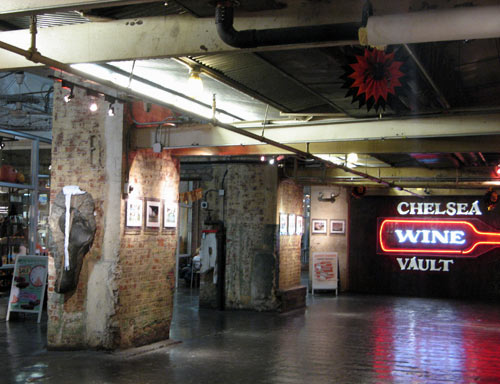
The ground-level retail concourse (completed in April 1997) boasts a bustling collection of businesses, most involving food — artisanal, raw, fresh, prepared; above, office space for tenants, including media and broadcasting companies such as Oxygen Network, Food Network and the local New York City cable news station NY1.
The brick walls, wood floors and exposed pipes serve as reminders of the building’s industrial past.
At BuonItalia, a shop specializing in imported Italian foods.
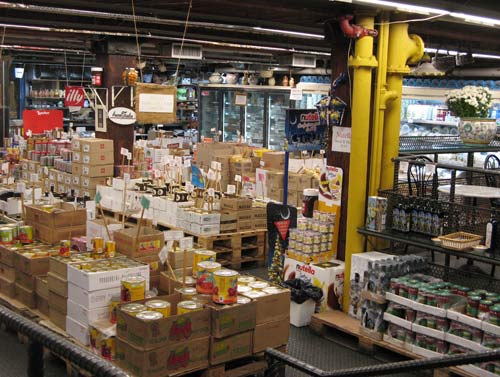
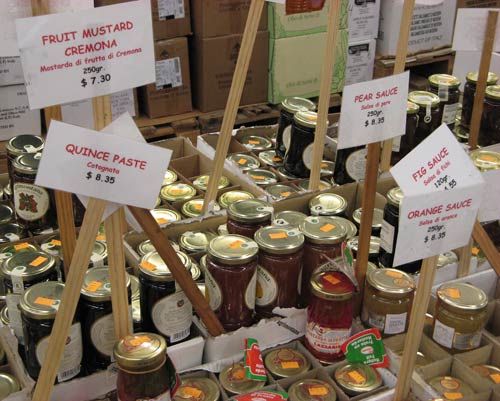
The store will be hosting a Fresh White Truffle Festival on November 13 and 14 between 6:00 and 9:00PM, serving white truffle dishes and tastings of Italian wine. What a delight this market is: stacked crates packed with olive oils, vinegars, biscuits, tinned fish, sauces, jams and pastas — fresh, frozen and dried in an endless variety of shapes. Also walls of impressively well-stocked dairy and meat cases. I had trouble deciding on my purchases, and finally settled upon some pumpkin ravioli, a hunk of pancetta and a bottle of orange-flower water (from France, not Italy.)
| S | M | T | W | T | F | S |
|---|---|---|---|---|---|---|
| 1 | 2 | 3 | 4 | 5 | 6 | |
| 7 | 8 | 9 | 10 | 11 | 12 | 13 |
| 14 | 15 | 16 | 17 | 18 | 19 | 20 |
| 21 | 22 | 23 | 24 | 25 | 26 | 27 |
| 28 | 29 | 30 | ||||
Search
Popular Tags
Categories
Archive
- July 2010
- July 2009
- January 2009
- November 2008
- September 2008
- August 2008
- July 2008
- June 2008
- May 2008
- April 2008
- March 2008
- February 2008
- January 2008
- December 2007
- November 2007
- October 2007
- September 2007
- August 2007
- July 2007
- June 2007
- May 2007
- April 2007
- March 2007
- February 2007
- January 2007
- December 2006
- November 2006
- October 2006
- September 2006
- August 2006
- July 2006
- June 2006